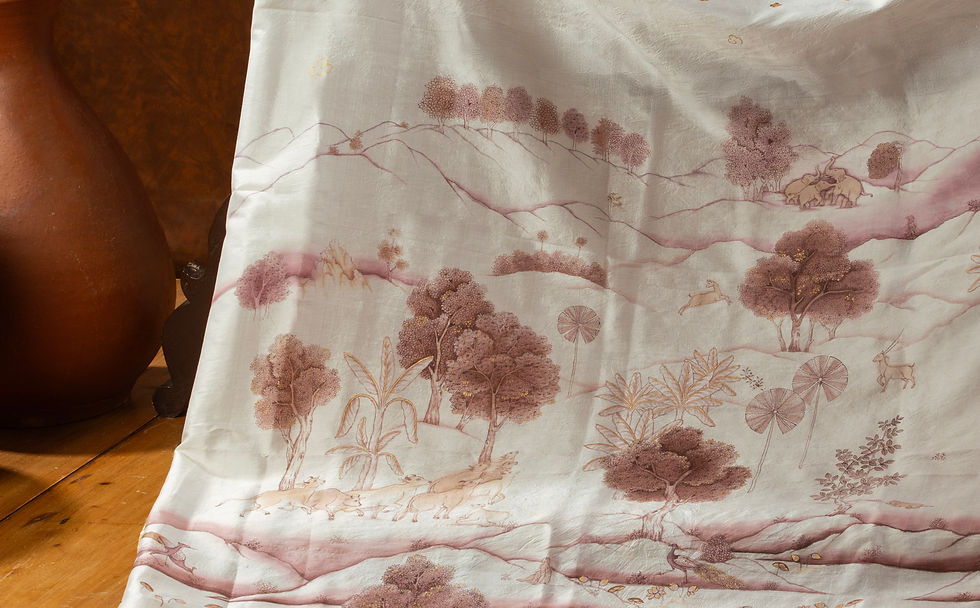
Kapil Sharma
is a sixth-generation miniature artist from a traditional Nathdwara painting lineage. Trained in Pichhwai painting from the age of nine under the guidance of his grandfather, Late Ghanshyam Sharma, he carries forward a deeply rooted devotional and technical tradition.
A graduate in Visual Communication from the National Institute of Design, Kapil bridges miniature painting and contemporary design. His practice reflects a seamless dialogue between inherited craftsmanship and modern visual thinking.
His works are part of several private collections, and he has exhibited across India.
is a sixth-generation miniature artist from a traditional Nathdwara painting lineage. Trained in Pichhwai painting from the age of nine under the guidance of his grandfather, Late Ghanshyam Sharma, he carries forward a deeply rooted devotional and technical tradition.
A graduate in Visual Communication from the National Institute of Design, Kapil bridges miniature painting and contemporary design. His practice reflects a seamless dialogue between inherited craftsmanship and modern visual thinking.
His works are part of several private collections, and he has exhibited across India.

Kapil Sharma
Udaipur | Multidisciplinary visual artist
Journey
Kapil began his artistic training under the guidance of his grandfather, Late Ghanshyam Sharma, learning the discipline and devotional depth of Pichhwai painting at an early age. Growing up in a household where art was central to daily life, creation felt instinctive and natural.
As a child, he was equally fascinated by objects and structure. Museum visits often inspired him to return home and recreate swords, daggers, and models using cardboard and scrap materials. This curiosity for building and form gradually shaped his interest in design.
His later education at the National Institute of Design expanded his visual vocabulary, allowing him to reinterpret traditional miniature practice through contemporary methods and technology.

Style
Kapil identifies as a multi-disciplinary artist working at the intersection of fine art and functional design. Trained as both a miniature painter and a graphic designer, his practice naturally blends these two disciplines.
Through his studio, Studio Func, he engages with a wide range of creative challenges including branding, motion graphics for films, and art for interior spaces. He is particularly drawn to technically demanding projects that require experimentation and problem-solving.
Kapil continually explores new ways to apply antique aesthetics to contemporary contexts. For him, the process matters deeply. He believes that art should demand effort, and that the struggle within creation often leads to the most meaningful experimentation.


Journey
Kapil began his artistic training under the guidance of his grandfather, Late Ghanshyam Sharma, learning the discipline and devotional depth of Pichhwai painting at an early age. Growing up in a household where art was central to daily life, creation felt instinctive and natural.
As a child, he was equally fascinated by objects and structure. Museum visits often inspired him to return home and recreate swords, daggers, and models using cardboard and scrap materials. This curiosity for building and form gradually shaped his interest in design.
His later education at the National Institute of Design expanded his visual vocabulary, allowing him to reinterpret traditional miniature practice through contemporary methods and technology.
Kapil Sharma
Udaipur | Multidisciplinary visual artist
Style
Kapil identifies as a multi-disciplinary artist working at the intersection of fine art and functional design. Trained as both a miniature painter and a graphic designer, his practice naturally blends these two disciplines.
Through his studio, Studio Func, he engages with a wide range of creative challenges including branding, motion graphics for films, and art for interior spaces. He is particularly drawn to technically demanding projects that require experimentation and problem-solving.
Kapil continually explores new ways to apply antique aesthetics to contemporary contexts. For him, the process matters deeply. He believes that art should demand effort, and that the struggle within creation often leads to the most meaningful experimentation.