

"Where colors find their way,
Where past and present stay,
In threads that cross and bind,
Many worlds align."
Crossroads
Sari ID: 26 REMA CSR AAM
By Rema Kumar
Collection: Journey and Exile
.jpg)
Created by: Rema Kumar, New Delhi
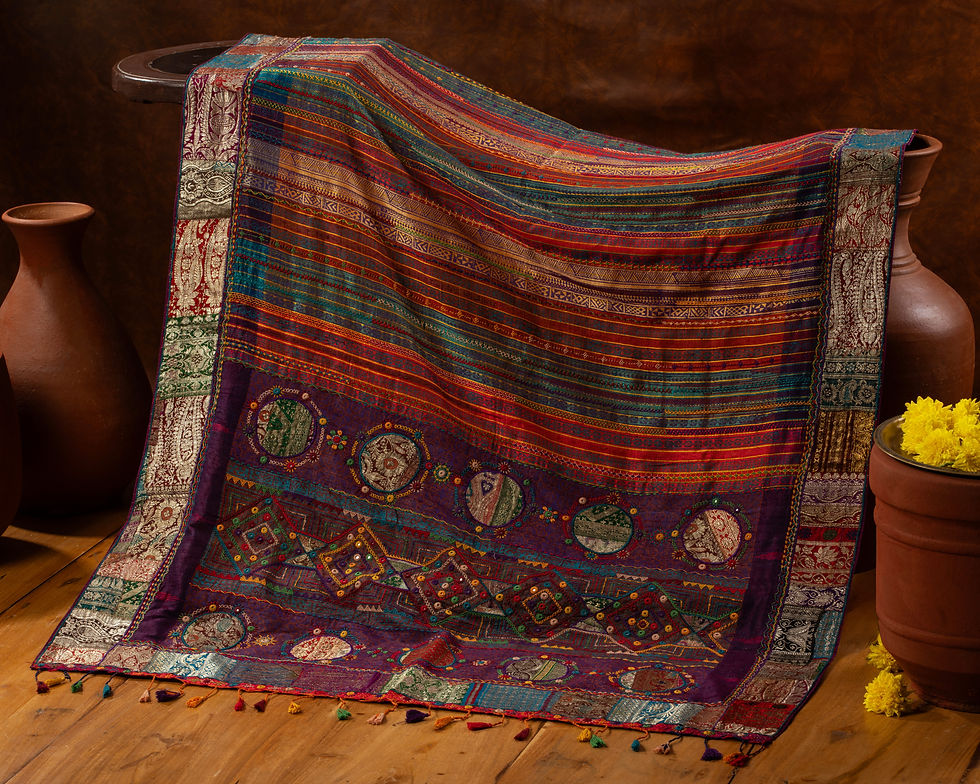
Sari Details: Tussar-Dupion silk woven from surplus yarns, block-print, vintage Benares borders, cotton threadwork and mirrors
Latest Exhibit: Asian Art Museum, San Francisco (March 2026)
Includes: Blouse kit (materials for two blouses) and certificate of authenticity
Care: Dry clean only by a textile specialist
Status: Available for sale
The Artist
Rema Kumar is a textile designer with nearly three decades of experience working closely with master weavers and artisans across India. She has led design interventions spanning from Uttarakhand to Kutch, Assam to Odisha, developing collections of saris, garments, and home linens that celebrate craftsmanship while ensuring artisan livelihoods.

The Inspiration
Crossroads is conceived as a meeting point. A place where cultures, crafts, and histories intersect.
Handwoven in Champa, Chhattisgarh, the sari brings together multiple traditions into a single textile narrative. Geometry and organic motifs coexist, each layer representing a different voice within a shared dialogue.
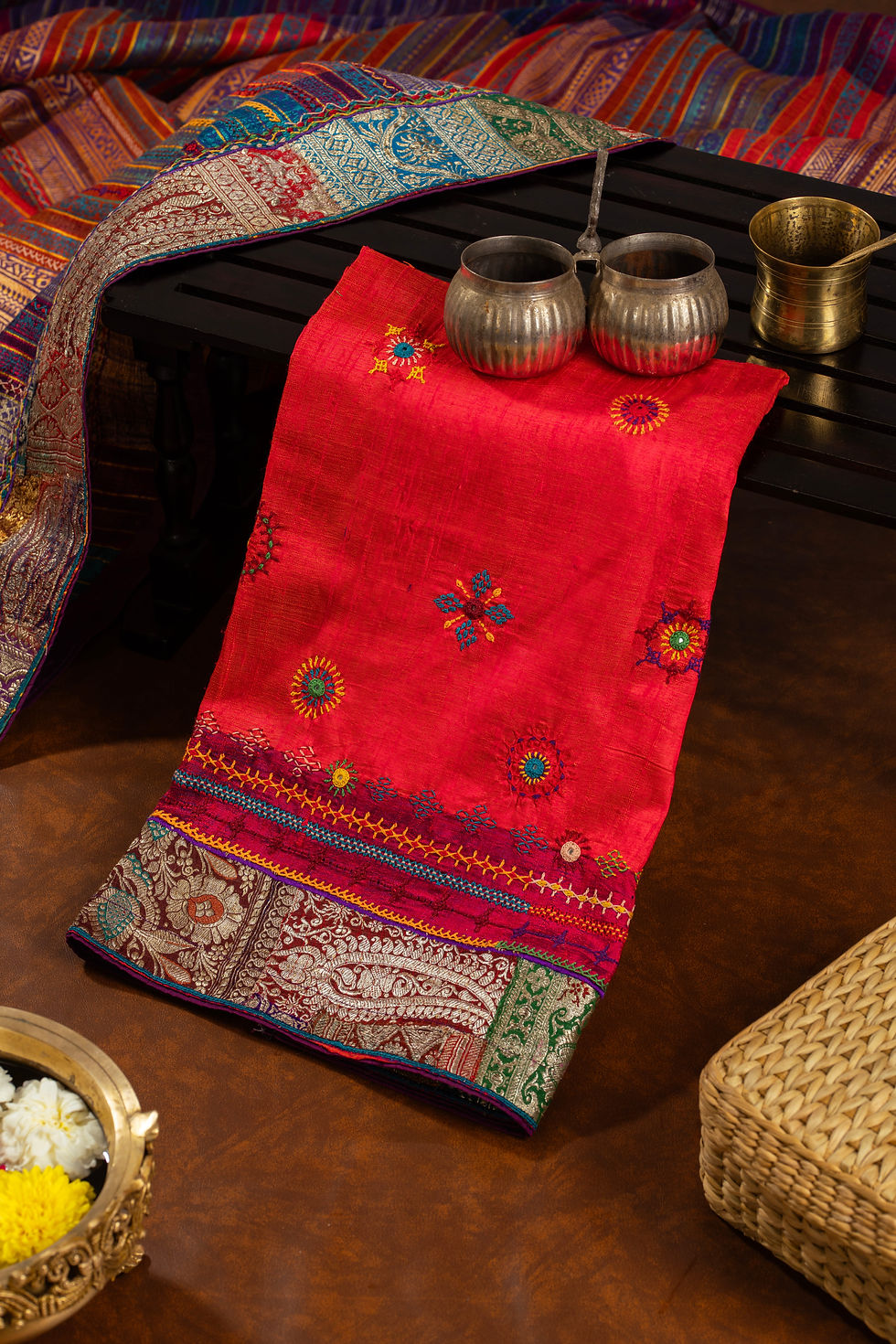
The use of vintage Benarasi brocade introduces another geography, another time. Patchworked into the borders, these fragments carry echoes of older textiles, now reimagined within a new context.
.jpg)
.jpg)
From Sari to Art
The process began with a handwoven base created from leftover yarns, giving new life to existing material. Multicolored stripes and the traditional temple motif anchor the sari within its regional identity.
Layer by layer, the surface evolves. Hand block printing introduces geometric borders. Patchworked Benarasi brocades are appliquéd onto the fabric, adding depth and history.
The final layer comes through Lambani embroidery, created by a women’s collective. Their stitches move across the sari, binding its elements together while adding texture. Mirrorwork adds subtle light, completing the composition.
Despite the complexity of techniques, the process remained collaborative. Even across distance, the artist and artisans worked in constant dialogue, shaping the sari together.


Message for the World
Rema wanted the wearer to see it as a meeting place of hands, histories, and intentions.
It is a map of many journeys, held together by thread.